
A photo of a mist shrouded Broomfield course looking over towards the town with Montrose steeple in the background, this was taken from the 4th Medal tee early one morning at the start of October.
---------------------------------------------------------------------------------------------------------------------
This month I will highlight some of the life that can be seen on the golf courses that aren't always so welcome.
Rabbits

Young Rabbit.
The rabbit shown above may look cute but the damage that they can cause to the golf courses is considerable, especially when their numbers become out of control. They seem to love nothing better than to make a small scrape then move on to make another and then another!! They also love digging holes in the majority of the bunkers on a nightly basis. Although they never seem to make scrapes on the greens they do nibble these areas down to well below our cutting height , which compromises the smoothness and trueness of the putting surfaces.

Rabbit burrow.
The burrows that the rabbits make are normally within the cover of the many gorse bushes, but they often make them out in the open too, as pictured above. They are not only unsightly but also become trip hazards to both golfers and the general public alike.
Cranefly
 |
| Adult Crane fly.
More commonly known as the Daddy - Longlegs, the adult crane fly are normally seen around September when they emerge from their pupal case. They mate immediately and lay between 200 -300 eggs per female insect. The eggs hatch out into larvae known as leatherjackets in about 14 days, and these larvae remain in the soil and turf for about 9 months. Eventually the larvae go into pupal stage where they remain for 9 -10 days and then when the pupa is ready it works it way out of the ground.

Leatherjacket.
It is the leatherjacket that causes the damage both directly and indirectly. By spring they will have grown considerably in size and can eat the grass roots to such an extent that the grass dies back. Secondary damage can be caused by birds such as crows and starling ripping up the turf searching for the larvae.

Empty pupal case.
It is quite common to see the brown sheaths of the empty pupal cases sticking out of the turf after an emergence of a flight of crane fly. This year the a great number of these empty sheaths could be seen around the links, this was especially noticeable on the broomfield fairways.
|
Worms

Earthworm.
Britain has around 25 types of earthworm, although not all occur in turf areas. The fine fescue grasses that we try to promote favour a sandy soil with a PH that is slightly acidic. The majority of earthworms cannot tolerate these conditions, so we have a smaller population than you are likely to find on inland parkland courses. Of the 25 types of worm only 3 regularly produce casts.

Worm casts.
It is these casts that can cause the problems. When casting is heavy the material is unsightly; causes uneven greens and forms a muddy moisture retentive playing surface. These damp conditions can increase the likelihood of turf diseases such as fusarium taking a hold. The casts themselves also provide an ideal seed bed for weed seeds such as daisies to germinate.
However earthworms are also beneficial to the soil profile. Their tunnels create important routes for water and air movement through the soil, increasing the effectiveness of aeration, drainage and irrigation. They also help to break down organic matter which would otherwise be likely turn into thatch. Thatch is the term given to the build up of dead organic material which can normally be found just below the base of the grass plant. Thatch build up can cause soft, water retentive greens, which in turn can encourage outbreaks of turf diseases all of which will detract from the playability of the greens.
WEEDS
The definition of a weed is "a plant growing in the wrong place". Many of the wild flowers that can be seen in the rough etc would be classed as a weed if they found their way onto the main playing surfaces. Pictured below are some of the more common weeds that are likely to be found on these playing surfaces.

Daisy.
One of the most recognisable weeds, daisy seed will geminate easily in worm casts and any other bare areas within the turf. Any that are found on the greens are weeded by hand.

Autumn Hawkbit.
This weed forms rosettes which can get a hold on the greens if left to do so. Again these are removed by hand if found in these areas. It is widespread on the links.

Dandelion.
Another well known weed which can thrive on the links. They are most likely to be found on the tee banks or on the fairways.

Clover.
Clover can become a major problem on all areas of the golf course. It can spread quickly and are most prominent in dry conditions and when nitrogen levels are low, this is when the bright green patches stand out from the pale grass.
We try to limit the use of chemicals on the golf courses for both financial and environmental reasons. However we do hire in a contractor to spray the fairways when it is deemed necessary. For any of the smaller areas we either spray it out our self or if possible weed by hand.
---------------------------------------------------------------------------------------------------------------------
Pictured below is a selection of other photographs that I have taken this month.
FUNGI
Following on from last months pictures of fungi a few more species have been spotted around the courses this month.
 |
| Fly Agaric. |
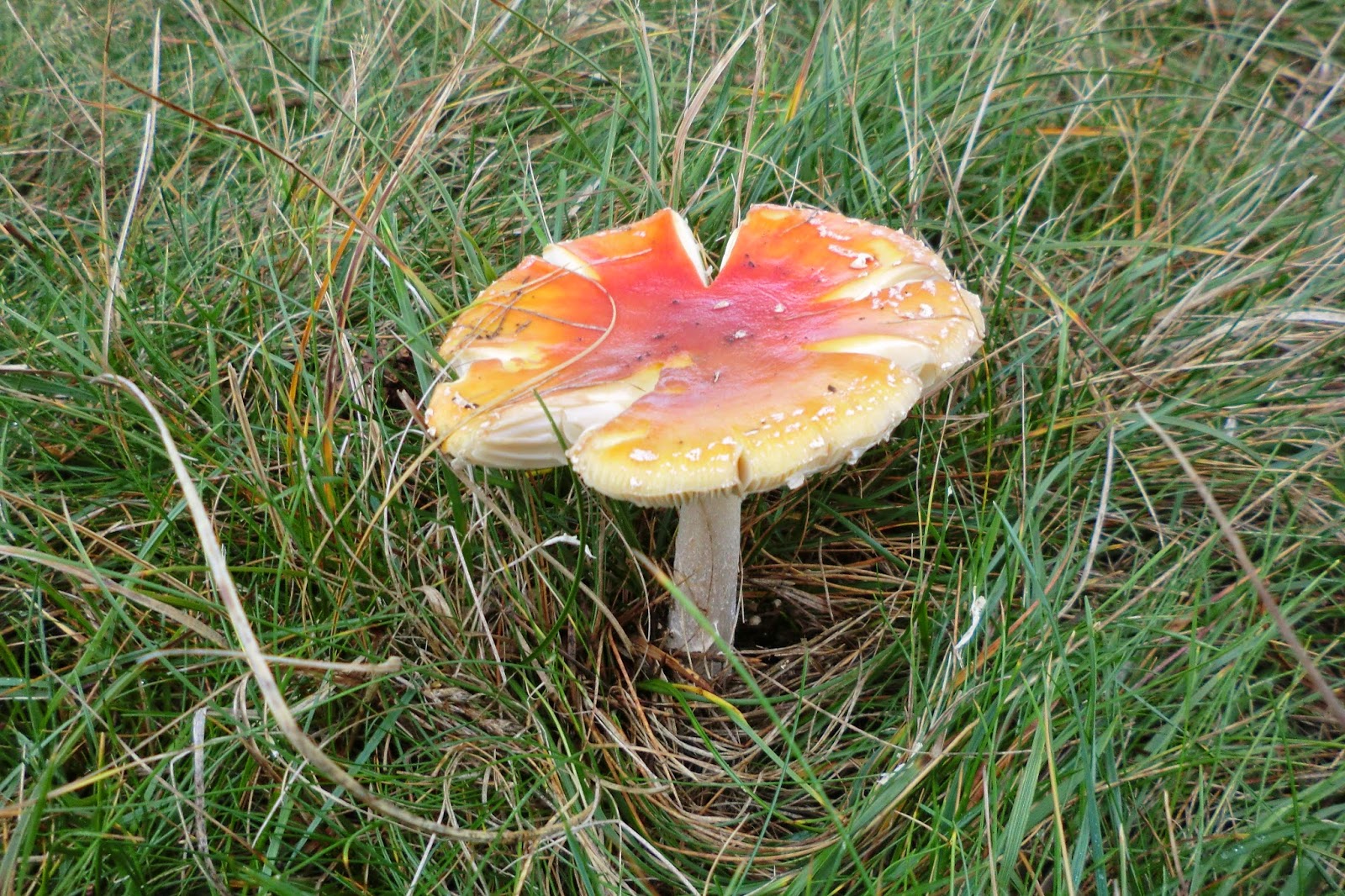 |
| Fly Agaric. |
The Fly Agaric is probably one of the most recognisable of all the mushrooms. The 2 pictured above were growing under the pine trees between the 10th and 11th holes of the Broomfield course. The Fly Agaric is a hallucinogen and considered poisonous. They normally grow together, sometimes in large groups, in woodland re-appearing in the same location year after year.
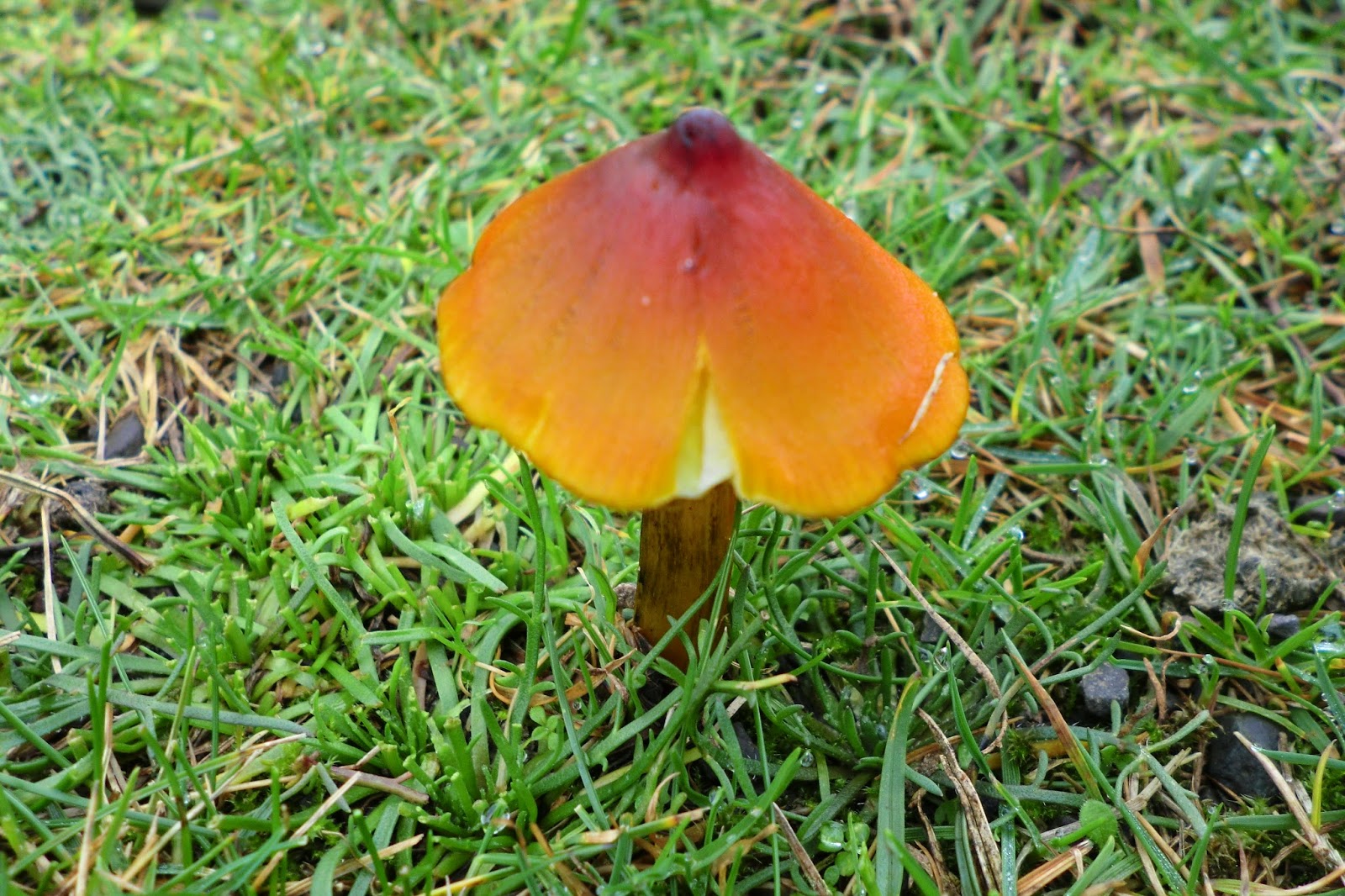 |
| Blackening Waxcap. Commonly known as the Blackening Waxcap, this very variable grassland mushroom is one of several species whose caps turn black with age. It can be distinguished from other similar Waxcaps by its long lasting fruitbodies which, once mature, turn jet black all over and can remain standing for many weeks. |
 |
| Spiny Puffball. A member of the Puffball family, these mushrooms can be seen in various locations on the links. This particular one was photographed just to the left of the 5th Medal green. |
 |
| Shaggy Ink Cap. The Shaggy Inkcap can often be seen growing in small groups. It is not a common sight on the links. The Inkcap pictured above was just one of a small group growing near our organic waste dump, up behind the 4th Medal fairway. |
 |
| Yellow Brain Fungus.
Yellow Brain Fungus grows on dead wood. In the picture above it is growing on dead gorse branches, however it is not the dead wood that it feeds on, but that of Crust Fungi that themselves have been feeding on the wood. Yellow Brain must therefore be classed as a parasitic species.
|
 |
| Waxcaps. The Waxcaps include some of the most spectacular gilled fungi but they are sensitive to pollution and nutrients. As a result, they usually disappear in land that is treated with chemicals or fertiliser. Large areas of the golf courses are low in nutrient and are left untreated making it ideal for this species of fungi to grow. There is a large number of different varieties of Waxcaps making it very hard to identify one from another. |

|
Meadow Coral.
This coral fungus is common in unimproved grassland. In long grass the fruitbody is often tall and sparsely branching, however in close cropped turf, such as shown in the photo, it is nearly always more coral like.
|
---------------------------------------------------------------------------------------------------------------------
SNOW BUNTING
The three photographs shown below of a Snow Bunting were taken beside the 6th Medal fairway. It is the first time that I have seen one of these birds on the golf courses at Montrose.The single bird first appeared on the 20th of October and could still be seen around the 6th and 7th holes of the Medal course, where it stayed for over a week.

Snow buntings breed in upland areas of Scotland, although in very small numbers estimated to be around 50 pairs.

Over winter, Scotland receives around 250 - 500 Snow buntings from Norway, Sweden and Eastern Greenland. In addition Scotland also receives the Icelandic sub-species and in some years many thousands can appear. Most will winter in the north but some will migrate further south to England.

In winter they inhabit sparsely vegetated landscapes especially coastal dune land. They can be seen , if you are luck enough, from September to April with numbers peaking between October and November.
-------------------------------------------------------------------------------------------------------------------------
Next month I will highlight one of the best and most dramatic displays of bird life that can be viewed in Britain at this time of year and fortunately for us it happens over the skies of Montrose.
Les Rae,
First Assistant,
Montrose Golf Links Limited.


